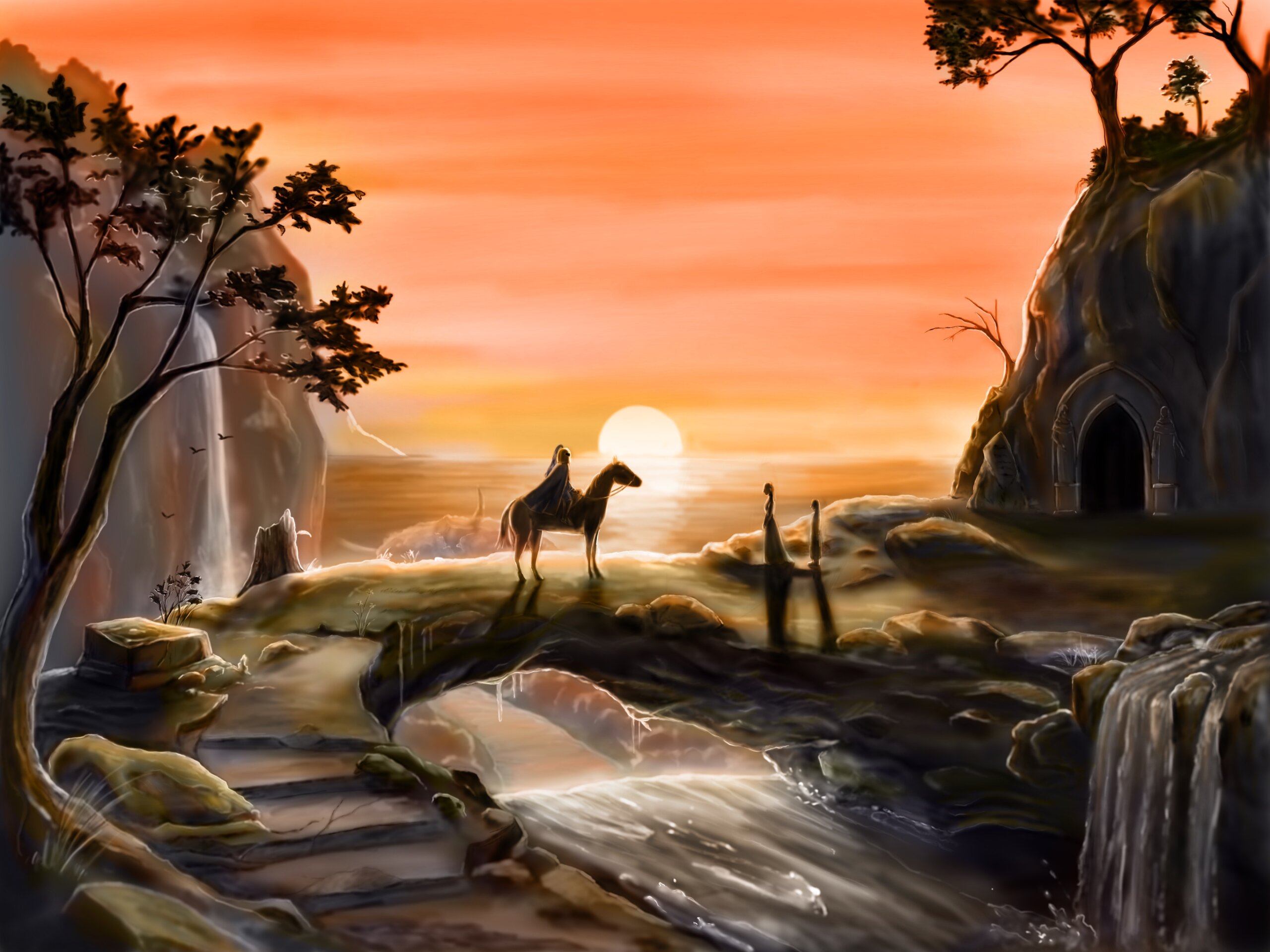
The World at a Glance
Firraksnarre is a historically layered world shaped by long cycles of political consolidation, fragmentation, and reform. Its civilizations are not isolated fantasy kingdoms, but interconnected cultural spheres linked by trade, migration, religious institutions, and the gradual evolution of language. Over centuries, empires rise, ritual authorities assert influence, linguistic borders shift, and intellectual traditions respond to crisis.
The structure of the world is defined less by individual heroes—although the Eight Heroes are the exceptions to this, for they performed many age-defining feats—and more by systems: dynasties that legitimize power through lineage, priesthoods that preserve sacred knowledge, and linguistic traditions that encode identity across generations. History unfolds across clearly defined eras, each marked by distinct ideological and cultural transformations.
Geographically, Firraksnarre contains multiple continents whose ecological differences shape their societies in divergent ways. Some regions foster centralized dynastic states; others sustain decentralized ritual communities or maritime networks. These political forms influence not only governance but also language development, religious practice, and artistic expression.
Language plays a structural role in this world. Several language families coexist and evolve across time, sometimes converging through contact, sometimes diverging through isolation or conflict. Linguistic change is treated as a historical force in its own right, shaping identity and memory.
At its broadest level, Firraksnarre is a study in continuity and rupture: how civilizations construct order, how that order fractures, and how meaning is rebuilt in its aftermath.
Geography
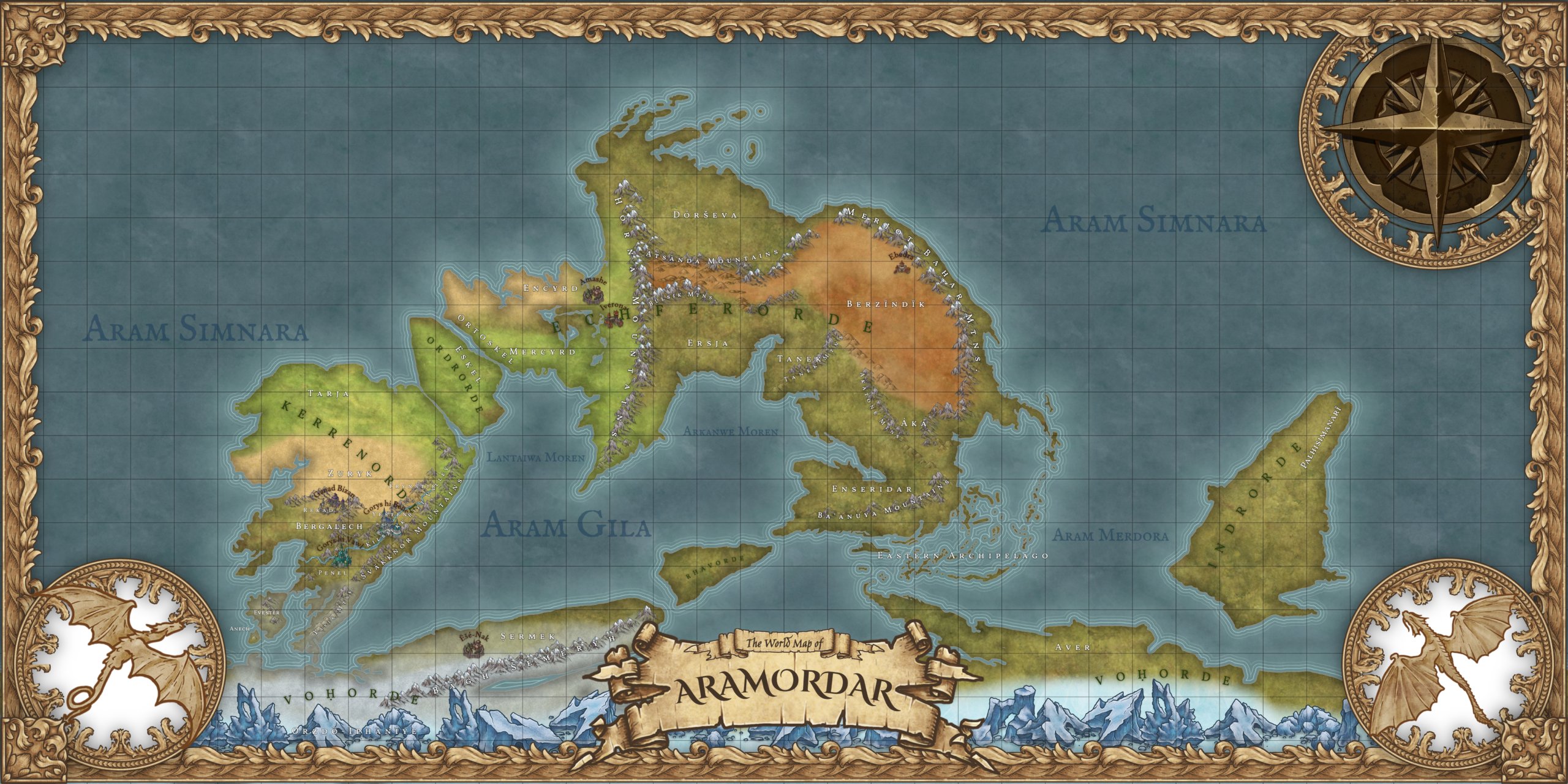
- Firu Hörnaa: the area west of the nearly impassable Hörna mountains. It is currently the base of operation of Woturih, and Fāra in Encyrd is the centre of learning for the Wielders.
- Dőrševa: an expansive tundra north of Atsānda mountains.
- Ersja: a large agricultural area south of Atsānda mountains. During the events of this story, there are many independent city-states and virtually no overarching political entity ruling over them (it was technically part of Ordi Echnaa, but the power of the king of the Ordi had waned).
- Berzïndïk: an arid, high-elevation area, which includes Ebedra, the historic capital of Ordi Echnaa.
- Áká: a valley home to the Wolflings of the East, a secretive society of exiles and outlaws.
- Enseridar: a desert region where one of the planet’s oldest known civilisation once prospered.
A small continent rich in ores and precious minerals.
- Tarja: A tropical area covering the northern coast of Kerrenorde.
- Zuryk: a vast sand desert home to dangerous Amdas. Dancers from Zuryk are commonly seen in Bergalechian courts.
- Bergalech
- Rekad: A comparatively flat region ranging from Aškim mountains to the east to the coasts of Nurkam to the west.
- Yešten and Frynštir: regions along the river Kilsjekk and north of the ancient city of Gorys hi Benel (also known as the Throat of Penel).
- Penel: a region along the river Kilsjekk, south of Gorys hi Benel. Steeped in legends and myths, Penel is known for its unique culture and languages, starkly different from that of the rest of Bergalech.
- Evester and Anech: islands off the coast of Penel. In terms of language, Evesterian and Anechian languages are genetically related to Penelish languages, and they are grouped under the Machian language family.
A snow-covered region where ’Igwam Bišra the Immortal reigned. It is also the origin of the Rimaism cult, which worships Eg’gored, the Lord of Death—and also Rebirth, according to some.
- Aver: a cold region home to glaciers and antarctic Amda beasts.
- Ṣermeḵ: includes the capital of the Voḥordian Kingdom, Ẽšé-Nak. King ’Igwam Bišra the Immortal and his father Bevennom the Accursed hail from here.
Palhisimanarï: home to nine proud clans of Palhisimanarï’ati, each worshipping their own god and constantly fighting for dominion.
A vast archipelago, including too many islands to name here. The islands are inhabited by Aleyuan and Ethúlic peoples, who live in harmony with the sea.
The Shape of History
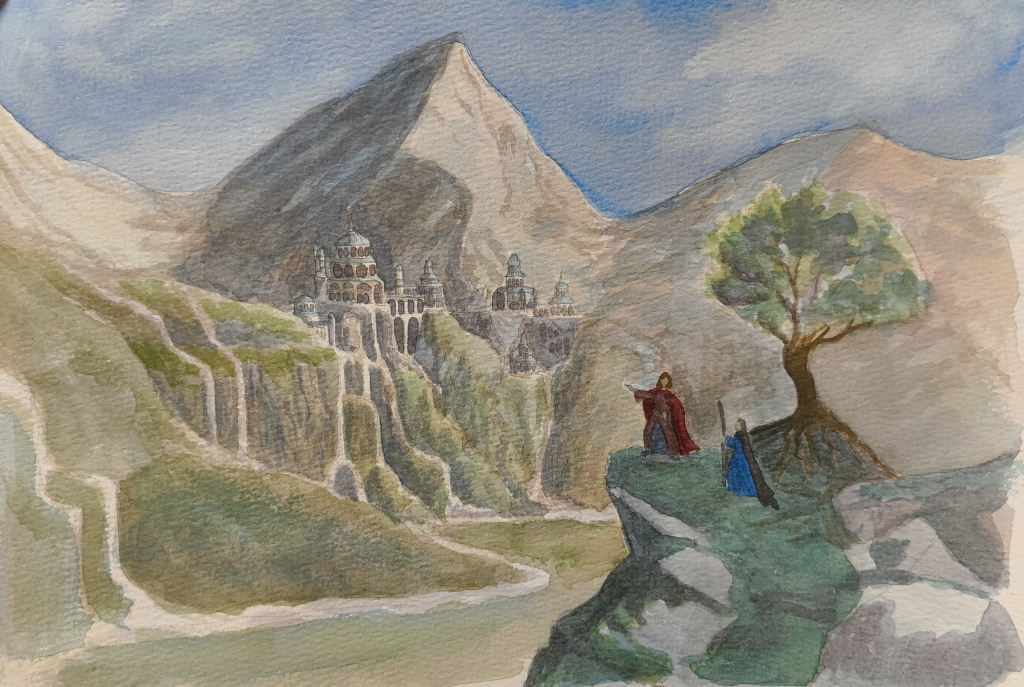
Time in Firraksnarre operates on a cycle basis, where one cycle consists of 768 years.
The cycle began its course when the original Eight Heroes came into being and ruled the world, and the dark times before their coming is called the Amdorsta in Varokeřim, meaning an ‘age without order’.
Starting from the day the Eight Heroes defeated Eg’gored for the first time, eight cycles, or Arge, followed; they were named after the eight elemental powers that permeates this world.
Language and Identity
Language is one of the central pieces of the worldbuilding of Firraksnarre. Just like real-life natural languages, language families in Firraksnarre branch and diverge across centuries, reflecting migration, conquest, isolation, and cultural exchange.
In this world, languages and linguistic change is not ornamental background detail — it is a historical process that shapes identity, authority, and memory itself.
Cosmology and the Sacred
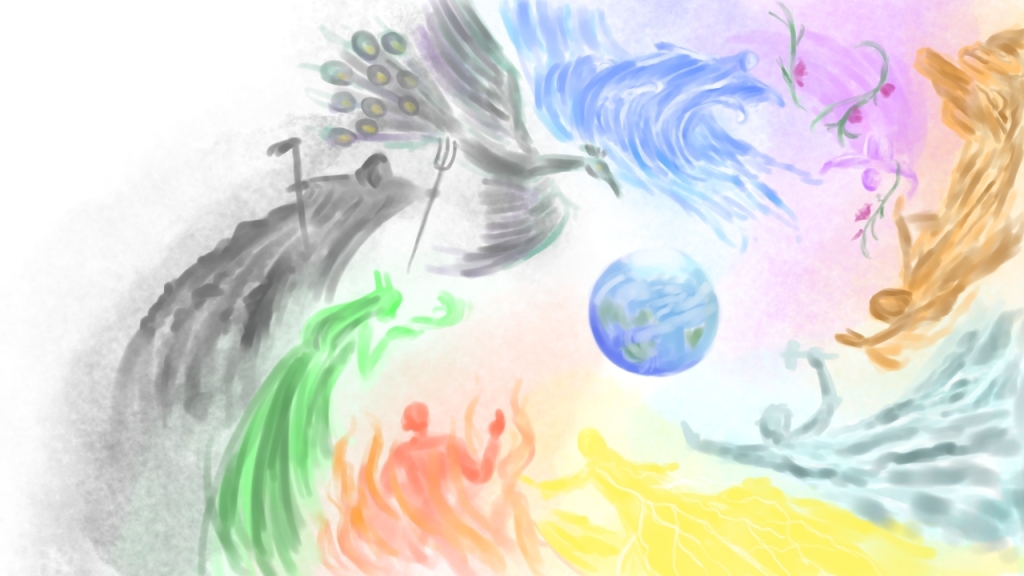
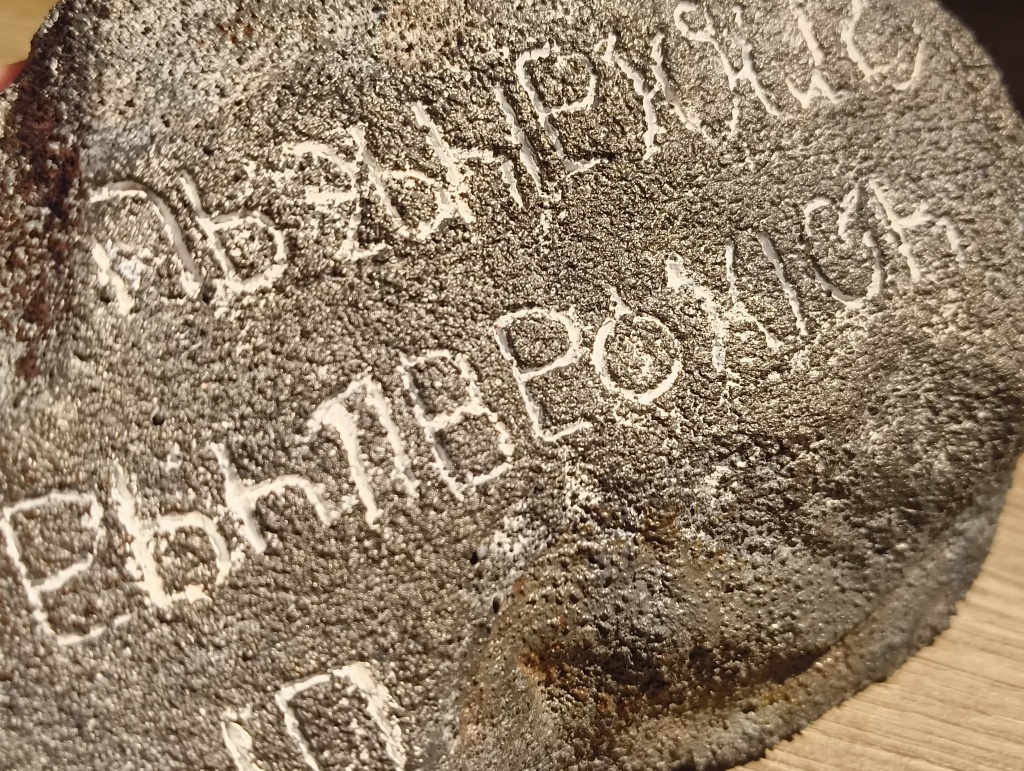
Firraksnarre is governed by an entity called Tiziar, wihch even the Gods must obey, and which set in motion all things that come to pass. After many years of research, the meaning of the name Tiziar is still unclear—some suggest that it comes from a Varokeřim phrase tiz i yare ‘time and space’.
According to Tiziar’s Plan (a document detailing the rise and fall of Firraksnarre), in the beginning of the universe there awoke nine lights. Eight of these lights became the Gods of Creation, and the remaining one became Eg’gored, the Lord of Death.
To explore specific eras, regions, or institutions, continue to the History section and browse the interactive timeline.